
What features should a good livestock polytunnel have?
It's early morning, and the lambing yard is barely lit; your wheelbarrow is stuck outside. A hurdle is blocking the entrance, and rainwater has soaked the bedding.
A livestock polytunnel needs to cope with changing weather and the demands of daily use throughout the year. Can you get the feed to the far end pen, then clear the dirty bedding without taking the place apart? Are the lambs dry? Is there adequate ventilation without harmful draughts at animal level? The flock also requires secure, robust barriers.
For this hypothetical farmer, the question is practical. Will the shelter be suited to the flock and the way the yard works?
How should livestock shelter design fit in with your stock?
Lambing changes how you need to use the space. The shared pen you filled with ewes last week now needs dividing for mothers and newborns, leaving you to find space for hurdles as well as animals. A headcount alone won't show where everything goes.
On your sketch, follow a barrow of feed from the entrance to the furthest pen. Then trace the route out with a ewe needing closer attention. Does a hurdle block either journey? That's something to resolve while it's still pencil on paper.
How many animals will it hold? Size, grouping and housing system change the answer; no single allowance covers every flock. Plot the proposed stock numbers on the usable floor plan, and seek appropriate husbandry advice if the layout raises concerns.
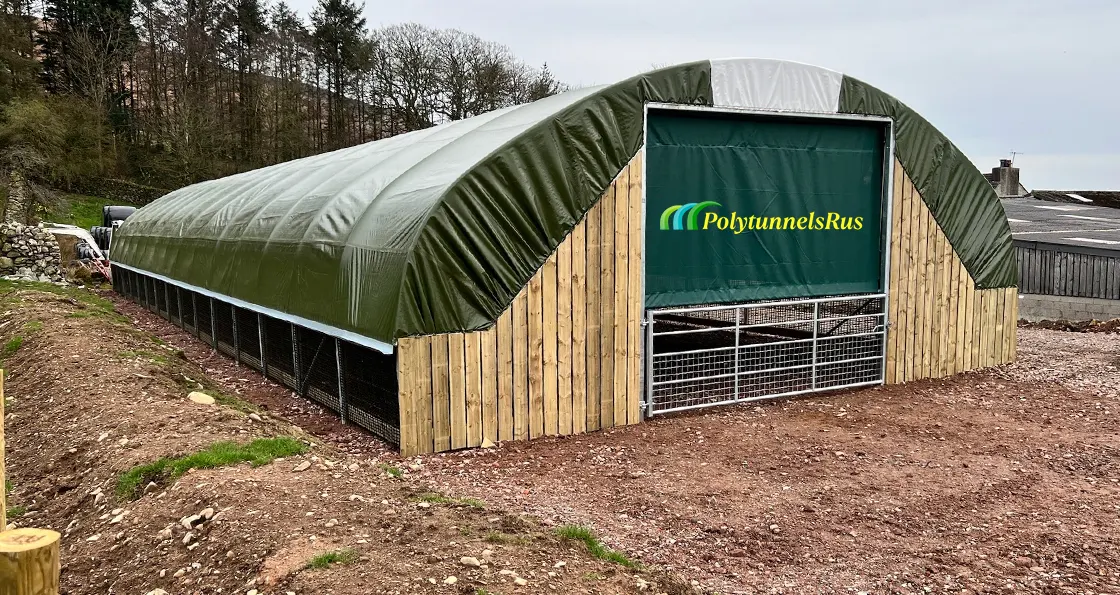
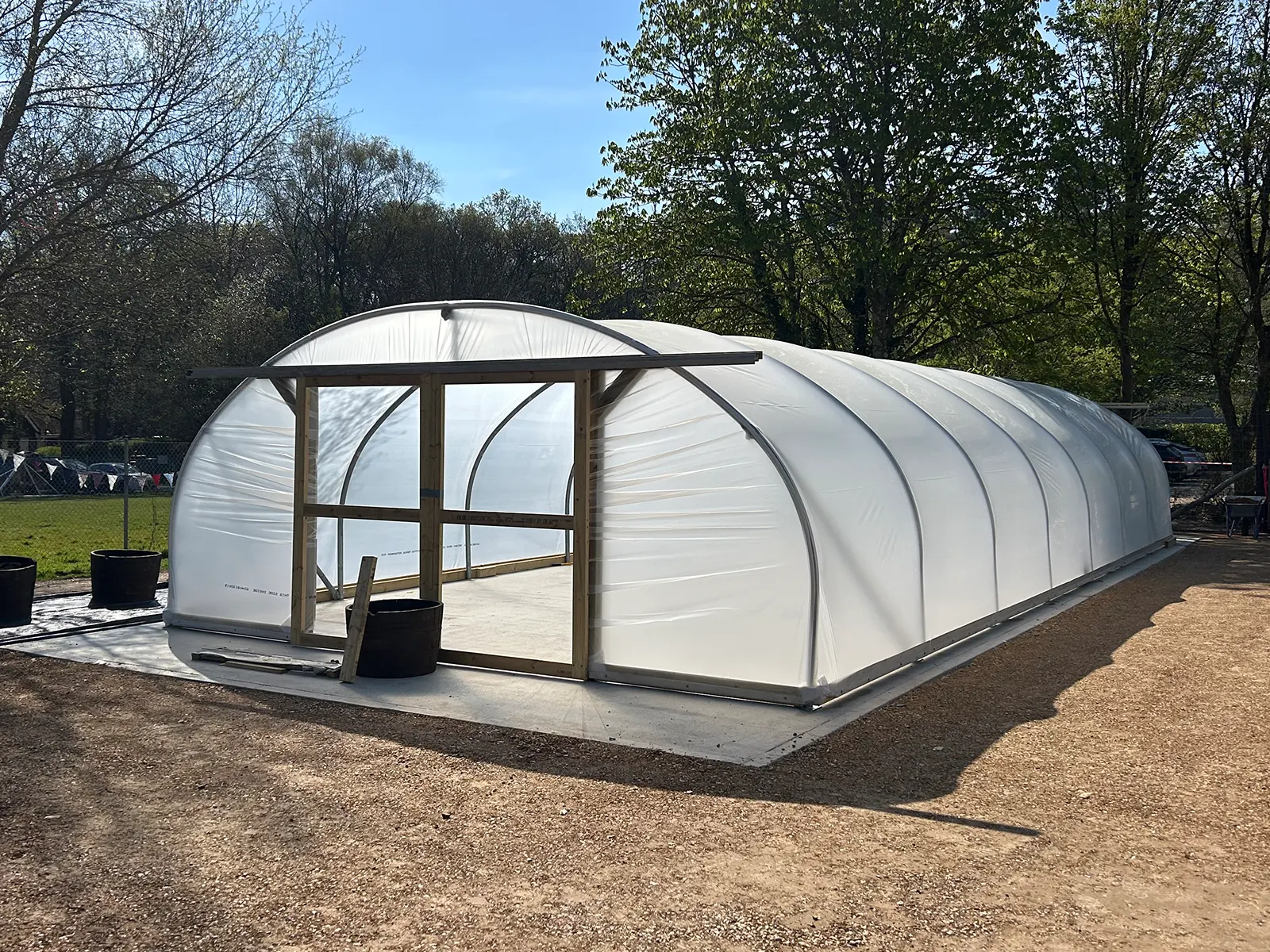
Take that sketch into the quotation discussion. PolytunnelsRus describes its livestock polytunnels as bespoke, tailored to each site and stock, including daily work. Where does your proposed pen arrangement sit within the quoted footprint?
Where will fresh air enter and leave?
Crouch beside the newborn lamb's bedding. The breeze you barely noticed walking through the entrance reaches this spot at animal height. The position of an opening affects the airflow reaching the lambs.
Fresh air matters. So does where it travels.
Picture the gates closed overnight with every pen occupied. There still has to be a route for fresh air through the shelter. By a sunny spring afternoon, the same building faces a different problem: heat. Young stock need particular attention then. Where will they find shade, and is clean drinking water within reach?
Anti-drip film deals with moisture on the film itself. It doesn't remove the need for air to move through an occupied shelter. Close the openings and you haven't bought yourself a dry building by choosing that cover.
We can't settle the airflow from this drawing. A barn beside the entrance changes the picture, as does the position of each opening; the surrounding yard belongs in the discussion.
Will the frame and anchoring suit the site?
A sheltered corner beside a stone barn looks different on paper from an exposed field edge. The same footprint doesn't make them the same installation.
“Heavy-gauge galvanised steel” is the frame description PolytunnelsRus publishes. That identifies the stated frame material, but the specification should also explain its suitability for the site and the protection provided against corrosion. It doesn't tell you whether the proposed frame suits this exposed field.
What holds it here? Our written specification will explain the anchoring against the actual ground and exposure. Any wind or snow claim needs supporting evidence and the conditions attached to it.
For the farmer, a visit to the proposed spot brings those questions off the page and into reality. Until it has been assessed, convenient ground is only convenient ground.
What makes a livestock polytunnel cover suitable?
A ewe leans on a hurdle and the hurdle touches the film. That's a rubbing point before the shelter has done a day's work. The pen layout needs clearance, alongside fixings that hold the cover securely at the right tension.
Animal barriers contain the flock. Polythene cladding serves a different purpose. A gate or pen division needs its own containment strength; the film isn't there to stop a sheep.
You'll find anti-drip, UV-stabilised polythene among the cover options we supply. Does UV stabilisation give you a replacement date? No. Check with us which type of film is advised, how it's held and what care it needs. Those details matter when you need to know what service life you can expect from a cover.
A tear during lambing also raises a working question: can you reach it with the pens occupied? Plan for repairs and access for replacing the cover before hurdles fill the edges.
Can you keep runoff away from the bedding?
Rain enters under the doorway from the yard. The cover could be perfectly sound, and the entrance bedding would still be wet.
Watch the neighbouring track during a shower. Water runs towards the doorway, joining whatever falls from the roof. A sound cover keeps rain off the pens overhead; it doesn't stop that flow arriving under the entrance.
Where does that water go afterwards? Is any drainage work needed outside the tunnel? These questions are worth resolving before installation.
It's 3 am and the pen you need is behind the feeder. Getting there means climbing, unless the layout leaves a clear passage. That route needs a surface suited to both stock and cleaning, with gates holding securely. A projecting bolt nearby could catch an animal or injure it.
Can machinery get in once the pens are fitted?
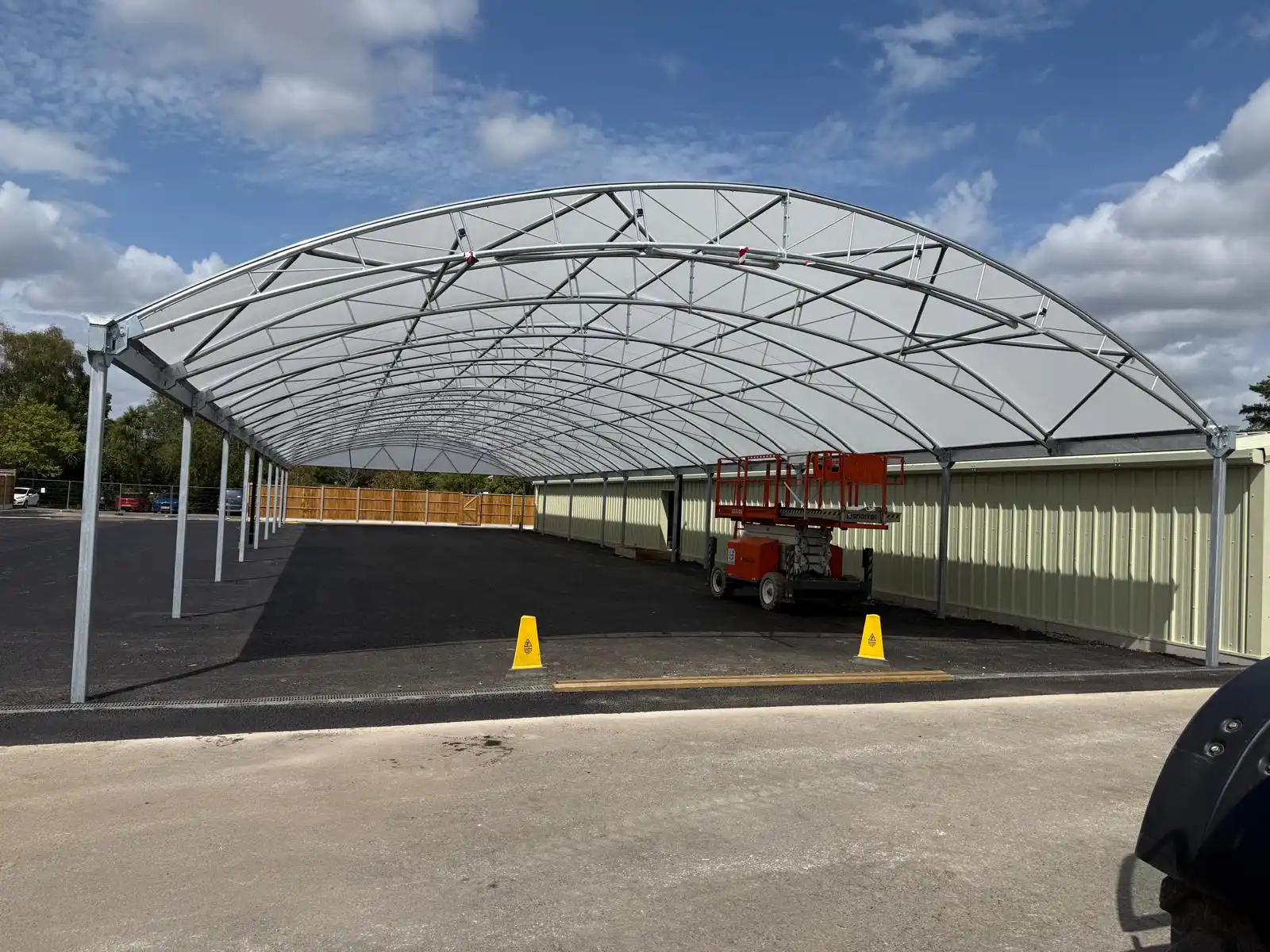
A loader's attachments change the space it needs. Put its measurements against the drawing with gates and barriers in place, including the clear entrance and usable height beside the curved sides.
For this farmer, the loader reaching the entrance is only half the question. Can it work inside without striking the frame or cover? Where will the sheep stand during cleaning?
Agree service access too. A water fitting hidden behind a fixed hurdle becomes a repair job with a pen to empty first.
What should the quote cover, and should you pay for installation?
How much will the livestock polytunnel cost? There is no verified price available for this example. The dimensions haven't been finalised, and the work included in the price hasn't been confirmed.
Check if ground preparation has been accounted for. Ask for the structure and preparation to be priced separately, with fitting identified too. Delivery and VAT need to be visible. Before ordering, there's also the planning position to establish for this location and use.
A farm with suitable equipment and spare time could handle agreed preparation itself. Paid installation puts that job into our team's hands at PolytunnelsRus. A serviceable existing shelter gives you another option: price repair or re-covering separately.
Today, draw the pens onto a measured yard sketch and mark the wet entrance. Bring your stock numbers, site details and working requirements to PolytunnelsRus to discuss a tailored quote.
Recent Blogs
-
 10 Sep 2026
-
 07 Sep 2026
-
 04 Sep 2026
-
 15 Sep 2026
-
 18 Sep 2026
-
 02 Sep 2026
-
 23 Sep 2026