
How to Measure a Polytunnel for a Replacement Cover | UK Guide
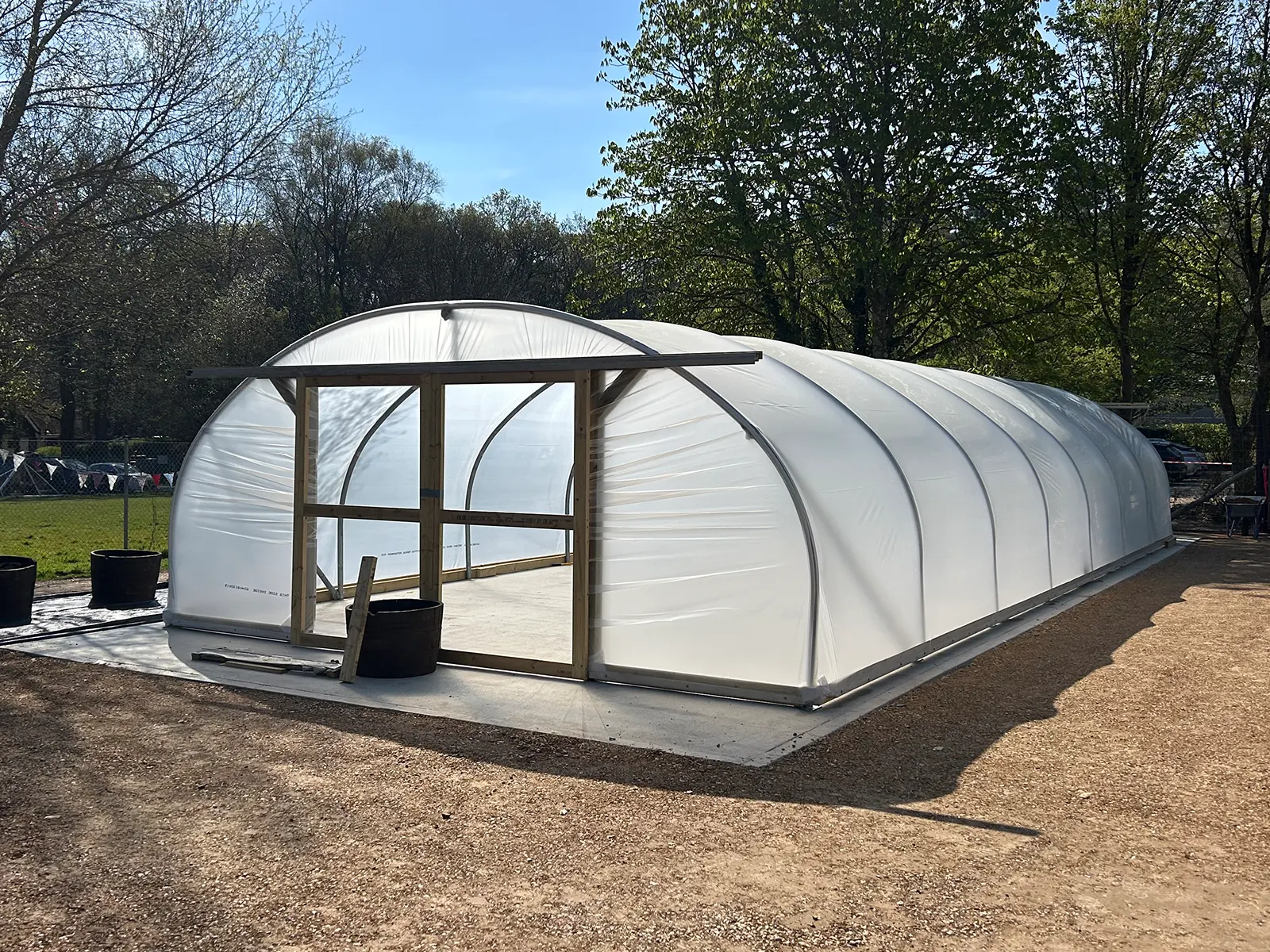
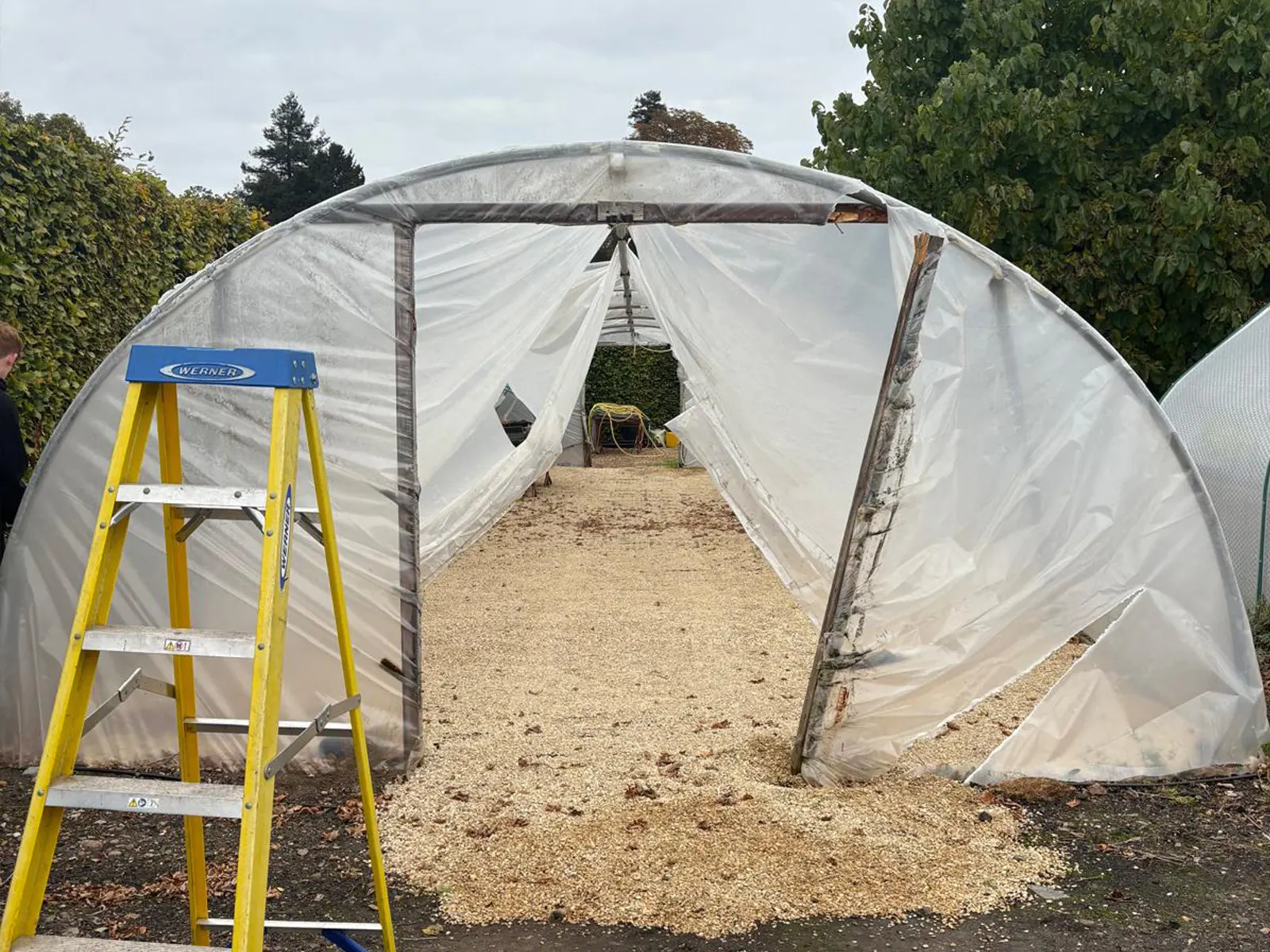
The cover has split beside a hoop, and you need its replacement ordered before the next crop goes in. Start with the frame. To measure the cover width, run a flexible tape over the hoop, following its curve between clearly marked points on either side. Record the frame length separately, then photograph the fixings and both ends.
To obtain an accurate quotation for a replacement polytunnel cover, send your measurements through our Contact Us page. The finished cover may require additional material for securing its sides and ends. The allowance depends on your tunnel type.
Which measurements do you need for a replacement cover?
A tape stretched across the ground tells you the tunnel’s footprint. It doesn’t tell you how much polythene will travel over the roof.
For a single-span tunnel, meaning one uninterrupted roof arch, record:
- Ground width across the frame, with the endpoints marked on your sketch.
- Maximum height from ground level to the top of the frame.
- Frame length from the first hoop to the last.
- Over-hoop distance, following the curve between your stated measurement points.
Keep everything in metres and label each dimension. A bare “12” on an order enquiry leaves someone guessing.
If the frame appears uneven, measure additional hoops and record the readings separately. Any differences between readings should be resolved before you order: uneven ground, altered bays or a distorted hoop could change the shape.
An old cover isn’t a dependable template. Once stretched, patched or torn, its dimensions tell you less than the steel underneath.
How do you measure over the hoop safely?
Run a flexible tape along the hoop’s curve. Record exactly where it starts and finishes, such as ground level beside each leg or the cover-fixing rails.
Those endpoints matter. A ground-to-ground measurement and a rail-to-rail measurement describe different distances, even on the same tunnel.
Measure from ground level using a safe method to pass the tape over the frame. Don’t walk on hoops or the cover. Where the height, crop or access makes that difficult, arrange help from someone equipped to measure it safely.
Photograph the route as well as writing it down. We can’t establish your measuring endpoints from a figure alone.
How much extra polythene should you allow?
There isn’t one allowance suitable for every tunnel.
How will the edges be secured: in a trench or against a fixing rail? Polythene that barely reaches either fixing leaves nothing to grip and tension. The required allowance depends on the fixing method.
If you include a fixing allowance in your over-hoop measurement without recording it separately, the supplier could add the allowance again. Your sketch needs the raw measurements, with the agreed allowances written separately.
The same applies at the ends. Does the roof sheet continue down to cover them? Are there separate end panels? Where do the doors and vents sit?
The distance from the first hoop to the last remains a frame measurement. The written order confirmation needs to show the finished sheet size and the agreed extra material at its sides and ends.
What changes on a commercial tunnel?
A side vent running along the crop changes where the roof sheet finishes. Gutters, separate panels and linked spans also change the specification.
One overall width won’t show where a roof sheet meets a gutter. Draw each sheet and its fixings, marking doors and vents. A photograph of the identification plate, or the make written beside the drawing, helps identify the frame.
A custom-sized polytunnel cover still needs a clear specification. “Cut to size” doesn’t resolve an uncertain fixing point.
For a multi-span installation, ask what drawing or site measurements the supplier needs before measuring it as though it were a single garden tunnel.
Should you fit the replacement yourself, and what does it cost?
Supply-only suits growers with suitable access, equipment and people available for the fitting work. It also leaves your team responsible for preparing the frame and following the supplier’s fitting instructions.
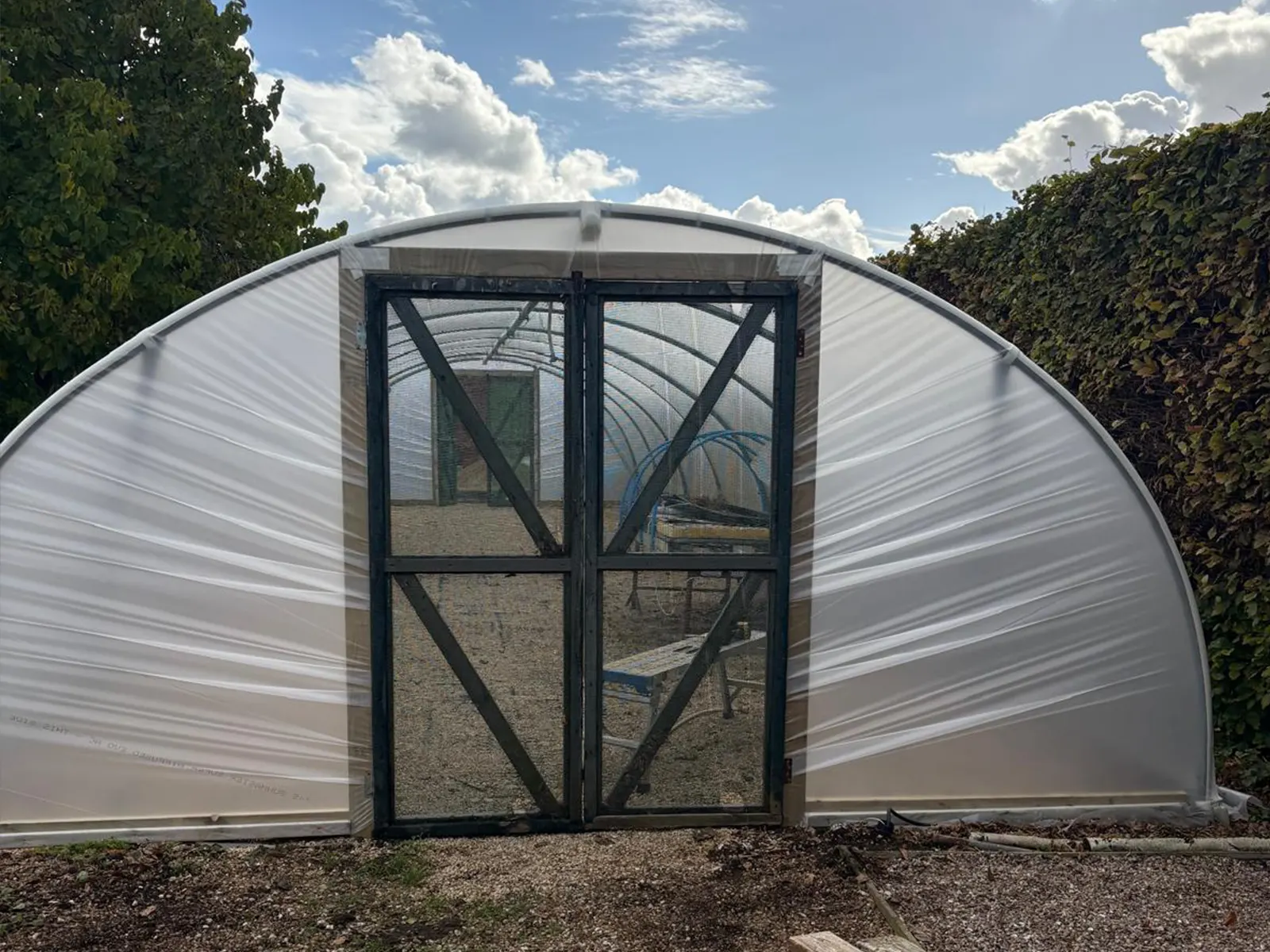
A recovering service can include the fitting work in the quotation, depending on the agreed scope. PolytunnelsRus describes a recovering service that includes old-sheet removal, frame checks, contact-point preparation, fitting replacement UV-stabilised polythene, and checking its tension and fixings.
Leaving a damaged cover temporarily is another choice, but assess what further tearing or lost protection would mean for the crop.
What will a polytunnel cover replacement cost? We don’t have a verified price range for this brief. A quote for a sheet alone won’t tell you the cost of having it fitted. If both options are in contention, two separate figures let you compare them. The supplier still needs to know the sheet dimensions and film specification, what needs doing at the fixings and how people and equipment will reach the frame.
Recent Blogs
-
 10 Sep 2026
-
 29 Sep 2026
-
 07 Sep 2026
-
 04 Sep 2026
-
 15 Sep 2026
-
 18 Sep 2026
-
 02 Sep 2026